2nd Percentile
Morningstar Global Large-Cap Blend Equity CATEGORY, Class I-ACC FOR THE 3-YEAR PERIOD AMONG 5536 FUNDS.
Already have a Thornburg.com account? Log In

An interview with Miguel Oleaga, Portfolio Manager
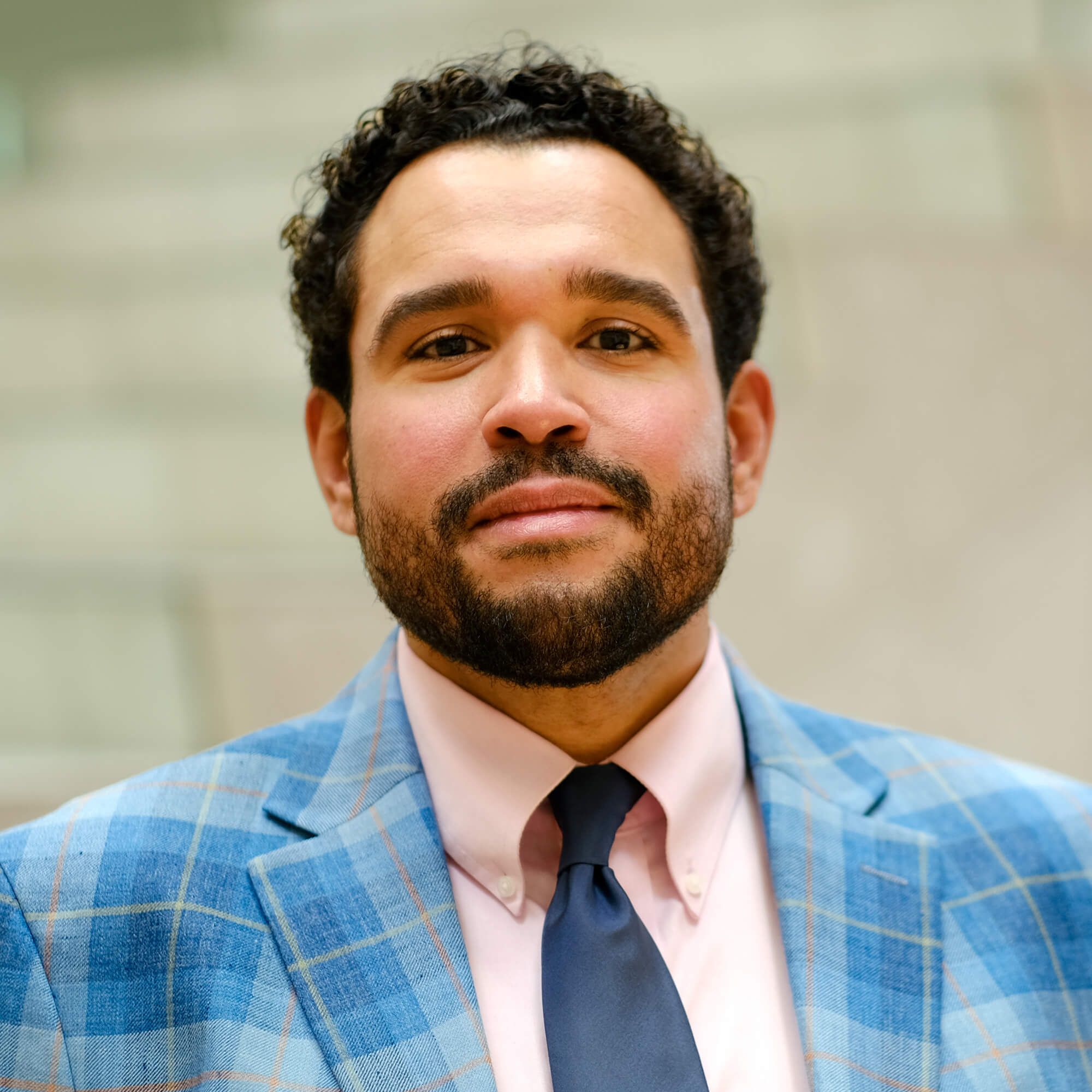

Q1: Thornburg’s Global Opportunities strategy reached its 20-year anniversary on July 28, 2026 — and the UCITS fund is coming up on its own 15-year anniversary in March 2027. What does this milestone mean to you?
Miguel – Twenty years is a moment to step back, reflect, and be genuinely grateful of the opportunity our partners and clients have given us. We started with a simple idea: if we buy better businesses at better prices and do so consistently over time, we should add value. Over 20 years — and with a great deal of trust from our clients to execute that strategy* — we’ve been able to show that we can.
Q2 : Looking back over the past several years, global events have created some very interesting market environments. What has anchored your investment decisions through all of it, and why has consistency mattered for investors in the fund?
Miguel – The key is consistency. We’ve run the same idea-generation process for Global Opportunities since its inception, and we’re always looking for what we believe are higher-quality companies in a sector or region at the right price. So, when a macro or geopolitical event hits, it can create more opportunities. When businesses and their valuations dislocate, and because we already know what we’re looking for, we can move into the market and identify the better companies. Often, whatever is in the headlines is short-term noise or not relevant to the fundamentals of the business. Throughout the full 20-year history, there has always been headline risk, and that has consistently given us opportunities to find great businesses at good prices.
Market regimes, 2008–present
Q3: Walk us through how an idea makes its way into the portfolio. Where do great ideas come from, and what ultimately earns a company a place among the 30 to 40 holdings?
Miguel – Since inception, the goal has been the same: identify quality companies. For us, quality means a business competing in an attractive part of the market — with real barriers — and ideally a leader within its industry or sector. Our benchmark universe has three to four thousand-plus names, so we use a pass/fail approach. With the team, we test for those elements of quality and assess whether it’s a good time to allocate capital. If yes, we do a full, deep-dive research process; if not, we move on. By knowing exactly what we want, we can narrow that universe down and stay focused on the best opportunities — and over time, that walks us down to the 30 to 40 names in the portfolio. Each year, we’ll turn over the rocks on a large number, look hard at roughly 150 names, then narrow to a short list of about 20 we’d consider. Historically, we add 8 to 12 new names a year.
Q4: Investors may hear “high conviction” and “diversification” and think of them as opposites. How can a portfolio be both — and why does that combination matter?
Miguel – For us, the high conviction comes from the bottom-up fundamental work — truly understanding the businesses we allocate to and having conviction in the discount to intrinsic value we see in each name. The diversification comes from where those opportunities are. Because we use a global generalist process, we can find mispriced businesses in sectors and geographies that other investors may overlook. The result, especially in recent years, is a portfolio more diversified than the reference benchmarks — so we get that duality of real conviction in each holding, with more diversification than you might get from an index or a competitor product.
Q5: You’re known as high-conviction investors, and the portfolio holds just 30 to 40 stocks. Can you think of a period that really tested your conviction — and what did sticking to your discipline mean for investors?
Miguel – There are absolutely times when it’s difficult. A period like 2023 or 2024 can be a challenge, because market leadership gets very narrow — and the question becomes whether the names you hold are participating in that narrow leadership or not. That can be tough from a performance standpoint. But the bigger picture is that the consistency to stick with the process is what drives good long-term results, rather than chasing momentum. That short-term stretch of underperformance is the price we pay for the long-term value creation in the strategy — because we’re reallocating capital to where we believe those values will be recognized over time.
Q6: There are a lot of global equity funds available. What do you believe truly differentiates Global Opportunities — and why should those differences matter to someone building a long-term portfolio?
Miguel – Three things. First, flexibility: the strategy looks at the investing universe from the bottom up, so we’re free to allocate across market caps, sectors and geographies — driven by fundamentals rather than a top-down view. Second, the diversification our bottom-up process creates; we’re not beholden to a benchmark. Third, consistency: this is a strategy that has been around a long time, and you can see what the consistent application of the process tends to produce. Given the opportunities we see today, we’re applying that same process — and we’re optimistic about what’s ahead.
Q7: Who is Global Opportunities designed for, and what role does it play in a portfolio?
Miguel – It’s designed for a wide variety of investors, depending on what they’re looking for. First and foremost, we aim to provide attractive diversification. One of the defining themes of the last decade-plus has been ever-increasing concentration, whether geographic or by sector. Take a US-centric investor: the S&P 500 is concentrated in US-domiciled stocks, yet roughly 40%-plus of those companies’ profits now come from outside the U.S. Having a manager who thinks about where the revenue and profits actually come from — in and outside the U.S. — can mean better diversification and better balance. For internationally focused investors, we can compare best-of-breed companies globally and decide where capital is best allocated. And for those simply seeking capital appreciation, the strategy focuses on underpriced, better businesses at better prices, which, applied consistently through market cycles, we believe can be attractive over the long term. Historically, it has been.
Q8: As you look ahead — five, ten years — where do you see the biggest opportunities, and why do you believe Global Opportunities remains well positioned?
Miguel – What we see today has been true for a few years now: a high degree of dispersion. There’s one corner of the market with very high expectations and valuations, drawing in a lot of the world’s capital — and we do participate in some of those names where we think the valuations are warranted and the quality is there. But beneath that sits a lot of the market — across different sizes, sectors, and regions — where great businesses are undervalued and under-appreciated. We believe we can find those great companies at attractive prices across the cap spectrum and around the world. For a strategy like Global Opportunities, that’s the opportunity. It’s what excites us, and we’re as busy as ever.