

Global energy shocks are reshaping inflation, central bank policy, and markets. Explore what higher oil prices mean for growth, rates, and global equities.
Key Takeaways
- Energy Shock Has Reset Global Policy Expectations: The Iran conflict has reignited inflation risks through higher oil, gas, and food prices, pushing central banks away from coordinated easing and toward renewed caution.
- Central Banks Are Prioritizing Credibility Over Comfort: After the 2022 inflation episode, policymakers are less willing to “look through” energy shocks, focusing instead on preventing second‑round effects in wages and pricing behavior.
- Growth Risks Complicate the Inflation Fight: Higher energy costs act as a tax on growth, as already‑restrictive policy and weaker momentum limit central banks’ flexibility.
- Global Markets Are Not Equally Exposed: Differences in energy dependence, strategic reserves, and infrastructure explain why regions such as Europe, Japan, China, and parts of emerging markets are responding—and performing—differently.
- Volatility Can Create Opportunity: History shows that broad selloffs tied to macro shocks can push asset prices away from fundamentals, reinforcing the value of diversification and valuation discipline.
A Global Energy Shock Rewrites the Monetary Policy Script
The global monetary landscape has shifted abruptly following the Iran conflict and its impact on oil, liquefied natural gas, and other critical commodities. What once appeared to be a path toward coordinated monetary easing has given way to renewed caution—and, in some regions, a more hawkish policy stance.
In the United States, the Federal Reserve has moved firmly into wait‑and‑see mode. While a quarter‑point rate cut remains penciled in by year‑end, both the Fed’s dot plot and market pricing now reflect a more neutral, if not hawkish, bias. This shift is understandable: the Fed recently raised its 2026 PCE inflation forecast to 2.7%, up from 2.4%.
The U.S. is far more energy independent than Europe or Asia, but it does not operate in a vacuum. It has seen gasoline prices rise roughly 33% on average since the conflict began.
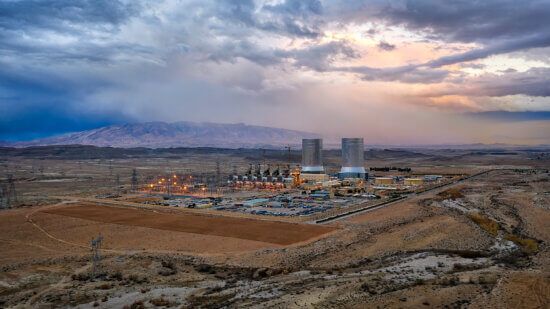
Global energy supply disruptions due to the conflict with Iran has catapulted global energy prices, feeding into inflation expectations, financial conditions, and policy decisions worldwide.
Inflation, Credibility, and the Limits of “Looking Through” Shocks
Concerns are more acute in regions that remain heavily exposed to energy imports and inflation pass-throughs. The Bank of England, European Central Bank, and Bank of Japan are all signaling a more hawkish bias as oil and gas prices push headline inflation higher.
Policymakers are focused not just on first‑round energy effects, but on preventing second‑round impacts on wages, pricing behavior, and inflation expectations. ECB President Christine Lagarde has explicitly noted that the central bank could respond to a moderate but persistent inflation overshoot, and recent economist surveys show rising expectations for at least one ECB rate hike this year.
In the U.K., markets have swung from pricing rate cuts to expecting multiple hikes by mid‑summer. Officials have pointed to inflation persistence as the key risk, particularly as food and energy pressures remain elevated. Fertilizer‑related products—such as urea, ammonia, phosphates, and sulfur—are facing supply disruptions at a critical point in the Northern Hemisphere agricultural cycle, amplifying food inflation concerns.
Japan faces its own pressures. A weak yen and higher import costs have contributed to inflation running above target for several years, and recent Bank of Japan minutes reflect an increasing tightening bias.
A broader credibility issue underpins these responses. After the inflation shock of 2021, central banks are far more sensitive to the risk of appearing complacent following repeated assertions that year about inflation being “transient” or “temporary.” Policymakers have openly acknowledged that businesses may pass through higher costs more quickly this time, making a “look‑through” approach far harder politically and institutionally.
When Inflation Meets Slowing Growth
At the same time, energy supply shocks are also a tax on growth. Higher energy prices tend to coincide with tighter financial conditions, and history shows that inflation‑driven rate hikes often give way to recession risks and eventual policy reversals.
Today’s environment is more constrained than in 2022. Policy rates are already much higher, fiscal stimulus is smaller, and economic growth across the euro area, the U.K., and even the U.S. is weaker. This tension helps explain why market expectations remain fluid. While some policymakers may tolerate higher headline inflation, others may ultimately prioritize growth stability if economic damage accelerates.
As a result, forecasts continue to diverge. Some market participants still expect rate cuts rather than hikes later this year, reflecting the possibility that growth risks outweigh inflation risks once the initial shock fades.
Uneven Exposure Across Global Markets
Global equity markets have reflected these differing exposures. With the notable exception of China, international equities have declined more than U.S. stocks since the conflict began. This partly reflects the U.S.’s greater energy independence but also follows strong returns in many international markets during 2025.
Perspective matters. Over longer time horizons, international markets have remained competitive, highlighting how short‑term shocks can obscure underlying fundamentals.
China’s relative resilience illustrates the benefits of preparation. Strategic petroleum reserves, domestic coal supply, a large renewables buildout, extensive nuclear capacity, and pipeline access to natural gas from Russia and Central Asia have helped cushion the impact of global energy disruptions.
Japan and South Korea are similarly prepared, with large strategic energy stockpiles and nuclear fleets acting as shock absorbers. Both countries have also taken policy steps to limit the impact of higher energy costs on consumers and businesses.
Europe’s situation, while challenging, is not a repeat of 2022. The region has materially reduced its dependence on Russian gas, diversified supply sources, and expanded infrastructure. Liquefied natural gas imports from the U.S. have increased significantly, while additional pipeline capacity from regions such as Azerbaijan and North Africa into Italy provides incremental flexibility. Continued investment in renewables and improved hydropower conditions in Spain have also helped.
Government intervention remains a possibility if high energy prices persist, including price caps or targeted subsidies similar to those used during the prior energy crisis.
Market Volatility and the Case for Perspective
Market volatility often creates both risk and opportunity. Broad selloffs driven by macro uncertainty can cause asset prices to diverge meaningfully from business fundamentals, particularly in international markets where currency movements and terms‑of‑trade effects add complexity.
History suggests that understanding individual businesses alongside evolving policy backdrops can uncover opportunities even amid uncertainty. Previous energy shocks created dislocations that rewarded patient, valuation‑driven approaches once conditions stabilized.
Supply dynamics remain difficult to assess in real time, but past episodes suggest that oil and gas markets tend to rebalance once production is restored and logistics normalize. Several major economies—including Japan and South Korea—have built strategic buffers specifically to withstand temporary disruptions.
The experience of recent years reinforces the value of diversification and perspective. Energy shocks can reshape markets, but they rarely redefine them permanently. As uncertainty fades, fundamentals tend to reassert themselves—often in ways that reward disciplined, long-term focused, diversified approaches.
Discover more about:
More Insights

Uncertainty is High, the Margin for Error Isn’t

Navigating Supply, Rates, and Opportunities in Real Estate

With Intelligence Honors Thornburg with Two 2026 Mutual Fund & ETF Awards

Structural Forces Are Reshaping the Investment Landscape

A Disciplined Approach to Global Equity Income