
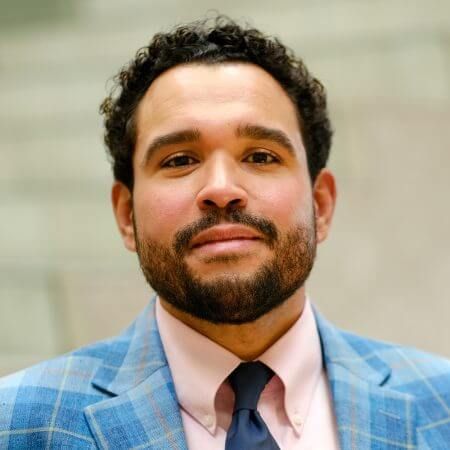
A conversation with one of the lead portfolio managers behind the strategy, exploring his path into investing and his perspectives on portfolio construction, risk management and high-conviction global equity investing.
Q: Miguel, can you tell us about your path into investing?
My interest in investing began quite early. In high school, I took an elective course that introduced the idea of owning shares in businesses. That concept immediately resonated with me. The idea that you could participate in the growth of companies like Walmart was compelling.
Professionally, I started in the back office at Putnam Investments. I was fortunate to have strong mentors who helped me transition onto the investment team. Early in my career, I specialised in healthcare outside the US, during a period marked by pharmaceutical patent cliffs. That experience reinforced the importance of understanding sectors deeply, while also appreciating the value of a broader, generalist perspective.
Over time, I moved into a more generalist role, supporting both value and growth strategies across international markets. I joined Thornburg in 2014 and have been involved with the Global Opportunities strategy in various capacities since then. In 2020, I became co-portfolio manager alongside Brian McMahon. What attracted me to Thornburg was its generalist culture and the opportunity to run a concentrated, high-conviction portfolio where each decision can have a meaningful impact.
Q: How would you describe your investment philosophy?
At its core, the philosophy is simple. We are looking to invest in quality companies at attractive prices.
We operate with a flexible, global, all-cap mandate, and we sit broadly in the “core” style box. That allows us to move between value and growth depending on where we see opportunities. Today, for example, we are underweight the US, particularly large-cap technology, and finding more attractive valuations in Europe and parts of emerging markets.
Quality is central to our approach. We focus on businesses that provide essential goods or services, have durable demand, and possess clear competitive advantages. That can take different forms. It could be a company like Freeport-McMoRan, where copper plays a critical role in global electrification trends and the asset base is difficult to replicate. Or it could be a growth business like Round One, a Japanese entertainment company with a unique model and disciplined expansion into the US.
Q: How do you generate ideas and make investment decisions?
Idea generation is a collaborative process. Both portfolio managers and our central research team contribute ideas, which we debate and prioritise.
We use what we call a “fast fail” approach. The first question we ask is whether the business is truly high quality. If it is not, we move on quickly. If it passes that test, we then assess the opportunity and valuation. Only after that do we commit time to deeper research.
Brian McMahon and I share responsibility for the portfolio, supported by a broader analyst team. We divide coverage based on expertise. Brian focuses more on financials and telecoms, while I tend to focus on cyclicals and technology. We share decision making authority and meaningful changes require alignment. When we disagree, we do more work. If conviction remains mixed, we may initiate a smaller position and continue to build our understanding.
Q: How do you think about portfolio construction and risk?
The portfolio is deliberately concentrated, typically holding between 30 and 40 companies. We typically add around 10 to 12 new names each year, with turnover of roughly 25% at the position level, although overall trading activity is higher as we actively manage position sizes.
New positions are generally initiated between 2.5% and 5%. Larger weights are rare and must be justified by a combination of return potential, risk profile and how the position interacts with the rest of the portfolio.
One area where our thinking has evolved is correlation. Since 2020, we have placed greater emphasis on identifying hidden exposures, for example multiple companies tied to the same macro driver such as China. We hold regular risk discussions to assess factor and price correlations across the portfolio.
We have also learned important lessons from periods of underperformance. Between 2015 and 2019, we owned some lower-quality businesses in pursuit of yield, such as Bayer following its acquisition of Monsanto. That experience reinforced our discipline. Today, we focus exclusively on high-quality businesses and are willing to wait for the right entry point.
Q: How do you approach benchmarks and macro factors?
We are benchmark-aware, but not benchmark-driven. The portfolio has a low correlation to the MSCI ACWI Index, primarily due to our current underweight to the US and greater exposure to Europe and emerging markets.
We do not make macro calls in a top-down sense. Instead, we use macro developments to guide where we focus our research. For example, following the correction in software and SaaS businesses, we increased our research efforts in that area. However, we will only invest when valuations align with our criteria.
Geopolitical risk is another important consideration. We tend to avoid sectors or regions where outcomes are highly dependent on unpredictable external factors. That said, we are willing to invest in more complex environments when the risk-reward is compelling. Our investment in Alibaba is one example, where pessimism around China created an attractive entry point given the company’s balance sheet strength and cash flow generation.
Q: What differentiates your approach as a team?
Alignment and discipline are important. I maintain a meaningful personal investment in the strategy, helping to align my interests with those of our clients.
We combine a structured investment process with the right temperament. That means being willing to invest in high-quality companies during periods of uncertainty, and having the patience to hold those positions over multiple years, even if performance is challenged in the short term.
We also place a strong emphasis on continuous learning. Markets evolve, and so must we. The ability to adapt without compromising the core philosophy is an important part of our edge.
Q: How do you define success for the strategy?
Success is long-term. This is a strategy with a 20-year track record, and our objective is to continue compounding client capital at attractive rates over the next 20 years.
That requires discipline, consistency and a willingness to look beyond short-term market noise. We are competitive by nature and aim to outperform both peers and the benchmark over time. At the same time, we are comfortable accepting periods of short-term underperformance if it supports better long-term outcomes.
Ultimately, our goal is to deliver a portfolio that clients can hold with confidence across market cycles, combining strong return potential with a more balanced investment experience.
More Insights

Why Advisors Should Consider an International Approach to Income

Beyond the Rate Debate: Navigating Today’s Fixed Income Signals

Thornburg Income Builder Opportunities Trust Announces Distribution

Reflecting On the Anniversary of Thornburg Global Opportunities Fund

Thornburg Investment Income Builder Fund 3rd Quarter Update