Thornburg International Equity ESG Strategy
BENCHMARK: MSCI ACWI ex-U.S. Index
Strategy Overview
The International Equity ESG Strategy employs a rigorous bottom-up research process to identify promising stocks of non-U.S. companies trading below their intrinsic value. Actively integrating ESG (environmental, social and governance) criteria into the fundamental approach allows the strategy to reflect ESG values through the portfolio’s investments without sacrificing the potential for attractive long-term risk-adjusted performance. The portfolio is high conviction but also well diversified by sector, country and market capitalization. Our three-basket portfolio construction process aids in balancing risk across the portfolio.
Strategy Inception Date
1 Oct 2015
Portfolio Managers
Portfolio Manager and Managing Director
Portfolio Manager and Managing Director
Portfolio Manager and Managing Director
Overview
Overview
Why Invest in This Strategy?
- Focused, diversified equity portfolio to include sustainable companies primarily in developed markets outside the U.S.
- Rigorous, fundamental research process focused on buying sustainable businesses with sound business fundamentals, trading at a discount to their intrinsic value and a defined path to success. Companies must also demonstrate one or more significant positive environmental, social and governance (ESG) characteristics; emphasizing the areas of environmental impact, ethical business activity, corporate governance, social factors surrounding customers, suppliers and employees and product integrity.
- Three-basket portfolio construction process seeks to provide style diversification and reduce volatility and deliver superior risk-adjusted performance over time.
Related Content

Performance
Performance
Returns
(As of 31 Mar 2025)2019
2020
2021
2022
2023
2024
Thornburg International Equity ESG Strategy - Gross (%)
25.96
28.11
22.22
-17.22
13.70
8.07
Thornburg International Equity ESG Strategy - Net (%)
24.79
26.90
21.05
-17.98
12.62
7.03
MSCI ACWI ex-U.S. Index (%)
21.51
10.65
7.87
-15.88
15.62
5.53
MSCI EAFE Index (%)
22.01
7.82
11.26
-14.45
18.24
3.82
Strategy Facts
Strategy Facts
(As of 31 May 2025)Strategy Assets
$503.0 M
Benchmark
MSCI ACWI ex-U.S. Index
Number of Holdings
52
Portfolio Turnover
50%
eVestment Category
ACWI ex-US All Cap Core Equity
Characteristics
Characteristics
Portfolio
(As of 31 May 2025)Portfolio
Benchmark
Weighted Average Market Cap
$118.6 B
$114.1 B
Median Market Cap
$76.0 B
$11.8 B
Price to Earnings - Forward 1YR
17.9x
14.5x
Price to Earnings - Trailing 12 Months
20.1x
16.4x
Price to Cash Flow
11.0x
8.9x
Portfolio
Benchmark
Price to Book Value
2.4x
1.9x
Return on Assets - 5 YR
6.3%
6.8%
Return on Equity - 5 YR
14.6%
15.5%
Historical 3YR Sales Growth
12.3%
15.0%
Active Share
86.7%
—
Portfolio
Portfolio
Top Holdings
(As of 31 May 2025)Name
Ticker/Symbol
Sector
Weight %
Mitsubishi UFJ Financial Group, Inc.
8306
Financials
3.3
BNP Paribas S.A.
BNP
Financials
3.3
L'Oreal S.A.
OR
Consumer Staples
3.3
Canadian Pacific Kansas City Ltd.
CP
Industrials
3.1
Enel SpA
ENEL
Utilities
3.1
Hitachi Ltd.
6501
Industrials
3.1
Linde plc
LIN
Materials
3.0
Samsung Electronics Co. Ltd.
005930
Information Technology
3.0
Danone S.A.
BN
Consumer Staples
2.9
Sony Group Corp.
6758
Consumer Discretionary
2.9
Exposure Breakdown
Exposure Breakdown
(As of 31 May 2025)Sector Allocation
Portfolio (%)
Industrials
25.8
Financials
14.7
Consumer Staples
9.7
Health Care
9.7
Information Technology
9.4
Consumer Discretionary
8.6
Utilities
7.7
Cash & Cash Equivalents
6.0
Communication Services
4.4
Materials
4.0
Real Estate
0.0
Energy
0.0
Top 10 Industries
Portfolio (%)
Capital Goods
13.9
Utilities
7.7
Commercial & Professional Services
7.3
Consumer Durables & Apparel
7.1
Banks
6.6
Pharmaceuticals, Biotechnology & Life Sciences
6.5
Financial Services
5.9
Transportation
4.7
Technology Hardware & Equipment
4.5
Materials
4.0
Top 10 Countries
Portfolio (%)
Japan
20.9
France
19.8
United Kingdom
8.8
Switzerland
8.2
United States
6.9
Canada
6.6
Germany
4.6
Spain
4.5
Italy
4.3
Korea, Republic of (South Korea)
3.0
Capitalization
Portfolio (%)
Large Cap (> $12 B)
85.1
Mid Cap ($2.5 to $12 B)
14.2
Small Cap (< $2.5 B)
0.7
Portfolio Managers
Portfolio Managers

Lei Wang, CFA
Portfolio Manager and Managing Director
Lei Wang is a portfolio manager for Thornburg Investment Management. He joined Thornburg Investment Management in 2004 as associate portfolio manager and was promoted to portfolio manager in 2006. Lei holds a BA and an MA from East China Normal University and an MBA from New York University. He is a CFA charterholder. Prior to joining Thornburg, he served as…
Learn More

Brian Burrell, CFA
Portfolio Manager and Managing Director
Brian Burrell is a portfolio manager for Thornburg Investment Management. He joined the firm in 2012 as an equity research analyst and became an associate portfolio manager in 2021 and portfolio manager in 2024. Brian earned a BA in economics from Reed College and an MBA from the University of Wisconsin in the Applied Security Analysis Program (ASAP). He is…
Learn More

Joe Salmond
Portfolio Manager and Managing Director
Joe Salmond is a portfolio manager for Thornburg Investment Management. He joined the firm in 2018 as an equity research analyst and became an associate portfolio manager in 2021, managing director in 2023 and portfolio manager in 2024. Joe earned an MBA from the Tepper School of Business at Carnegie Mellon University and graduated from Arizona State University with a…
Learn More
Literature
More Insights
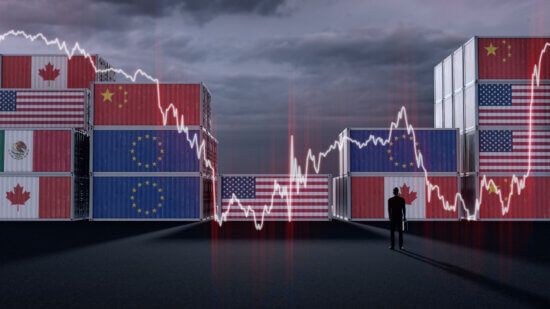
Markets & Economy
Tariffs, Stagflation, and the Fed: A Spotlight on Investors’ Most Pressing Questions
Thornburg’s client portfolio managers explore some of Wall Street's biggest themes.

Markets & Economy
Investment Perspectives from the Road: The UAE
Our investment professionals travel the world to evaluate global markets and unearth the most optimal ideas. Josh Rubin recently visited the United Arab Emirates (UAE), and here are his perspectives.

Fixed Income
Investor Update: A Potential Reprieve for the Municipal Bond Tax Exemption
We provide an update on the developments surrounding the municipal bond tax exemption in a fast-moving environment.

Markets & Economy
FOMC Update: Fiscal Challenges Taking a Back Seat to Geopolitical Risks
Christian Hoffmann, CFA, Head of Fixed Income, shares his perspective on the Fed’s stance and the potential impact of monetary policy.

Markets & Economy
Fixed Income: Finding Income and Playing Defense Through Volatility
Position fixed income portfolios for yield and ballast through market turbulence and economic uncertainty.

Emerging Markets
Investment Perspectives from the Road: India
Our investment professionals travel the world to evaluate global markets and unearth the most optimal ideas. Josh Rubin recently visited India, and here are his perspectives.