
Despite geopolitical uncertainty and market volatility, global equities continue to offer opportunities beyond the narrow group of stocks driving index returns.
After six months of surprises in 2026, many themes we have highlighted over the last 18 months remain equally topical today:
- The tensions between politics and economic resilience
- Whether uncertainty is appropriately priced into various asset classes and regional markets
- The capital intensity of the race in artificial intelligence
- Balancing the search for yield against being fairly compensated for risk
As was the case six months ago (and a year ago), we enter the back half of 2026 with limited clarity on the trajectory for the global economy or capital markets. After digesting the evolving U.S. tariff regime and conflict in the Middle East, thus far we’ve seen surprising resilience across most of the global economy. But global equity markets have narrowed considerably in recent years, particularly in the U.S. The second quarter saw a further dramatic reduction in breadth as AI-related stocks garnered most of the attention following the initial ceasefire agreement between the U.S. and Iran.
One surprising observation was that the S&P 500’s rally in 2Q26 ranked as the fourth-largest quarterly advance in history. An important nuance is that the three biggest moves came when markets bounced off the bottom following the Global Financial Crisis and peak COVID, while last quarter was simply a move off already reasonably high levels. With the current market (especially in the U.S.) oriented around momentum and mega-cap beta, it is essential to remain focused on individual security analysis and downside protection while pursuing differentiated returns. The following observations highlight key considerations from our diverse global equity investment team while offering a differentiated perspective rooted in active management.
A Resilient Global Economy
Trade uncertainty was high as the Trump administration unveiled, negotiated, reversed, and re-applied a variety of tariffs over the last 15 months. The outcome? Globalization, which extends beyond trade with the U.S., has continued largely unabated.
Gross exports grew across the world’s major economies, even as some supply chains were modestly reorganized in relation to the U.S. Most economies outside the U.S. remain on stable footing despite tariff-related economic friction, providing a still-solid backdrop for healthy corporate earnings around the world.
Global Trade Growth Has Continued Despite Tariff Friction
Gross Exports 12 Months Before and After Liberation Day ($ Trillions)
Source: Bloomberg, as of 31 March 2026
Before is April 2024 – March 2025 (representing the year before Trump’s tariffs/Liberation Day)
After is April 2025 – March 2026 (representing the year after tariffs started)
Prior to the Iran conflict, the resilience of global economies to withstand trade frictions had indicated we could have a solid environment for stock selection to shine, and this proved to be the case in January and February. But closure of the Strait of Hormuz elevated tail risks, and we’ve seen a narrower market – first in March with risk-off trading, and then the semiconductor-led AI rally of the second quarter.
Uncertainty is again higher with the collapse of the ceasefire, but the good news is that commodity price declines in June demonstrated that if that if commercial players and market participants expect the Strait of Hormuz to be even partially open, many key inputs and indicators of economic health can return to levels they’d been at 6-9 months prior to March. This contrasts from disruptions when Russia invaded Ukraine in 2022, and many dislocations did not normalize for at least 12 months.
Key Economic Indicators Have Normalized More Quickly than Prior Energy Shocks
Source: Bloomberg, as of 20 July 2026
While the continuation of growth trends in the rest of the world is now better protected with energy prices lower than during March, and interest rates and currencies remaining reasonably stable, there is a divergence between macro and micro data in the U.S.
First, as noted in our January 2026 Outlook, data indicates the current buildout of AI-related data centers and infrastructure is accounting for roughly half of U.S. GDP growth, i.e., while headline growth is around 2%, “Main Street” is growing about 1%. This is “fine,” but it is not particularly differentiated compared to the GDP growth seen in much of the rest of the world. In the 2010s, the U.S. economy was truly outpacing most of the world. But in the last several years, other economies have improved, while the U.S. economy has softened in sectors not exposed to the AI investment cycle.
Second, because the U.S. is a large energy producer, GDP calculations positively incorporate the improving trade balance from higher-priced energy exports. However, only about 500,000 Americans work in the energy industry, while nearly 200 million people are employed in other sectors. Consequently, far more U.S. consumers have been pinched by higher energy prices than may see higher incomes from the March-to-June spike. GDP may indicate a strong macro environment, but just as Main Street growth is currently running around European levels, U.S. and European wallets were similarly impacted by the recent energy price volatility.
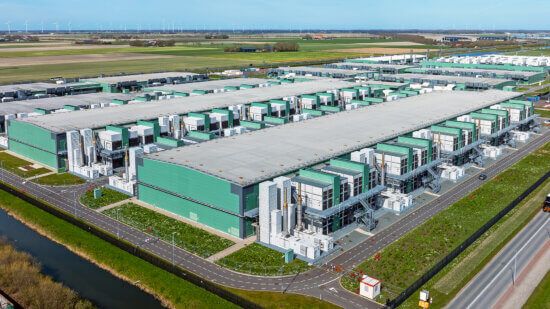
While the U.S.-led AI-driven tech cycle is currently strong, it is important to remember that it is a cycle. There are a small number of companies spending enormous amounts of money, and most of it is flowing through the U.S. construction industry (data centers) and the global semiconductor supply chain. Two different dynamics are driving narratives and investment decisions:
- Leading AI models have proven to be highly functional, and therefore several companies are generating substantial – and still accelerating – revenue deploying their services. However, the AI providers have not yet proven their business models can be highly profitable.
- The scope of investment has led to bottlenecks in physical tech and general infrastructure, which creates usage and pricing behaviors often seen for scarce resources. Potential AI capabilities, combined with uncertain monetization dynamics, may lead to increased regulation, and consequently, it remains difficult to predict what normalized earnings might look like for the AI ecosystem.
The points above highlight why investors are excited, but also why they must stay disciplined. We know the “hyperscale” companies investing in AI have not only ramped their spending at an almost unimaginable speed, but after having long been highly cash generative, in 2026, they will (in aggregate) spend nearly all their operating cash flow on capital expenditures. This year, they have also been the largest new issuers in the corporate bond market.
AI Has Caused the Tech Industry’s Capital Intensity to Increase Dramatically
Hyperscalers’ Aggregate Capital Expenditures
Source: Bloomberg as of 5 July 2026
Yet we are unlikely to know for several years whether AI-related profits can earn attractive returns on this investment. As with all investments, scenario analysis and consideration of the asymmetry of different outcomes are essential. In hot markets, and particularly narrow markets where “FOMO” takes hold, investors should not forget the importance of downside protection.
An Improvement in Market Breadth Should Be Good for Stock Pickers
There is a solid case for identifying stock-specific alpha opportunities in the AI space, but there are also clear risks to painting with too broad a brush. In momentum- and narrative-driven markets, it can be difficult to remember the benefits of a genuinely diversified equity portfolio.
A rare occurrence in 1H26 was narrow market breadth both inside the U.S. and elsewhere in the world. The U.S. market has narrowed considerably over the last decade as passive and levered ETFs increased correlations and sometimes created a circular reference for flows reinforcing flows, regardless of fundamentals. Only 1/3 of stocks in the S&P 500 are outperforming, the lowest share in more than 35 years. International indices have generally seen a much smaller portion of their returns coming from the very largest companies, but the AI semiconductor rally also narrowed the breadth of returns outside the U.S.
Market Leadership Has Narrowed Globally, but the U.S. Remains More Concentrated
U.S Index Concentration vs. International Breadth
Source: Factset, as of 30 June 2026
Currently, the earnings growth is incredible for beneficiaries of this AI-related surge in spending. But other areas of the global economy, with low- or no-dependence on the AI supply chain, should not be forgotten.
While global nominal GDP is growing in the mid-single digits, strong businesses operating across many sectors and regions are still expected to grow earnings at double-digit rates. Yet, for roughly equivalent growth outlooks, international stocks across sectors continue to trade at a discount to their U.S. peers (a simplified comparison is shown below between the equal-weighted indices to mitigate the effects of mega caps).
International Markets Offer Comparable Growth at Lower Valuations
Source: Bloomberg as of 5 July 2026
We note that although brokerages’ consensus estimates are for U.S. non-tech earnings to grow slightly faster than the rest of the world, it is worth remembering that many leading international companies have been beating consensus expectations over the last few years. But it’s not necessary to add international stocks to a portfolio simply to play the “beat-and-raise” game.
Investors in international stocks can also benefit from the optionality around a weakening U.S. dollar and notably lower valuations, while being “paid to wait” with dividend yields that tend to be 2-3 percentage points higher than similar U.S. stocks.
2022 and 2025 are recent reminders that diversification can enhance absolute return, and especially risk-adjusted returns, across the cycle. In a world where inflation remains reasonably predictable (although above the levels desired by central bankers) and economic growth remains positive (even if not as high as many would wish), looking beyond the hot dots of big tech to the broad variety of truly durable companies around the world can still be additive to client portfolios.
Final Thought
We face continued unpredictability in the second half as markets assess elections in the U.S. and other major economies, central bank decisions, and clear resolutions to myriad geopolitical complexities. And while the impact to GDP growth from current AI spending is known, whether these AI expenditures actually generate a sufficient future return on investment remains a question that investors will need to carefully assess.
With this backdrop, and given that the Main Street U.S. economy is on a more level playing field with other global economies, the sustainability of the 2Q26 melt-up in U.S. stocks is uncertain. Given the downside protection that comes from lower starting valuations and higher dividend yields, in many markets outside the U.S., it’s worthwhile for equity investors (based anywhere in the world) to consider reducing their U.S. allocations and diversifying into other geographies.
Great companies in all regions continue to adapt to succeed in this changing landscape. While we remain “macro and policy aware,” we are most focused on the resilience and unique characteristics of each individual investment. We believe the most valuable service portfolio managers can provide clients isn’t predicting politics or the macro, but rather to identify relative value in the shares of businesses that don’t simply survive, but can actually thrive, during uncertain times.
Discover more about:

More Insights

Opportunities in Overseas Equities

Quality Without Dogma: Why Valuation Still Matters

What Tight Credit Spreads Mean for Investors

Signal Over Noise: A Conversation on Global Markets

VettaFi Webcast: The Rise of International Equities