Thornburg Emerging Markets Equity Strategy
BENCHMARK: MSCI Emerging Markets Index
Strategy Overview
The Emerging Markets Equity Strategy employs a bottom-up, fundamental approach to investing, and targets a core return profile across the market cap spectrum, focusing on strong businesses that are attractively valued and have well identified paths to success. A defining aspect of the strategy is a three-basket approach to portfolio construction which mitigates benchmark-relative risk, ensures a balanced style exposure and allows stock selection to be the main alpha driver.
Strategy Inception Date
1 Jan 2010
Portfolio Managers
Portfolio Manager and Managing Director
Portfolio Manager and Managing Director
Overview
Overview
Why Invest in This Strategy?
- Flexible, focused core equity portfolio that invests primarily in companies in emerging markets.
- Proven bottom-up fundamental research process focused on discovering strong companies with leading market positions, solid management teams, robust corporate governance and conservative capital structures.
- Three-basket approach to portfolio construction with a focus on strong businesses helps to mitigate downside risk and seeks to produce strong risk-adjusted outperformance across many different market environments.
Performance
Performance
Returns
(As of 30 Sep 2026)2011
2013
2010
2019
2020
2021
2022
2025
2012
2023
2024
2017
2015
2016
2014
2018
Thornburg Emerging Markets Equity Strategy - Gross (%)
-14.18
17.37
33.00
30.88
24.44
-1.61
-24.69
29.13
24.66
7.68
6.89
37.26
-14.17
4.20
-1.45
-13.94
Thornburg Emerging Markets Equity Strategy - Net (%)
-14.84
16.36
30.72
29.67
23.29
-2.53
-25.41
27.91
23.69
6.67
5.89
36.12
-14.91
3.28
-2.30
-14.72
MSCI Emerging Markets Index (%)
-18.42
-2.60
18.88
18.42
18.31
-2.54
-20.09
33.57
18.22
9.83
7.50
37.28
-14.92
11.19
-2.19
-14.58
Strategy Facts
Strategy Facts
(As of 30 Sep 2026)Strategy Assets
$675.5 M
Benchmark
MSCI Emerging Markets Index
eVestment Category
Global Emerging Mkts All Cap Core Equity
Characteristics
Characteristics
Portfolio
(As of 30 Sep 2026)Portfolio
Benchmark
Number of Holdings
40
—
Weighted Average Market Cap
$554.0 B
$539.6 B
Median Market Cap
$43.2 B
$12.2 B
Annual Portfolio Turnover
31%
—
Price to Earnings - Forward 1YR
11.0x
11.1x
Portfolio
Benchmark
Price to Earnings - Trailing 12 Months
17.9x
18.9x
Price to Cash Flow
11.9x
11.3x
Price to Book Value
3.0x
2.3x
Active Share
61.0%
—
Portfolio
Portfolio
Top Holdings
(As of 30 Sep 2026)Name
Ticker/Symbol
Sector
Weight %
Taiwan Semiconductor Manufacturing Co. Ltd.
2330
Information Technology
16.2
Samsung Electronics Co. Ltd.
005930
Information Technology
8.1
MediaTek, Inc.
2454
Information Technology
4.7
Bid Corp. Ltd.
BID
Consumer Staples
3.6
SK hynix, Inc.
000660
Information Technology
3.5
SK Square Co. Ltd.
402340
Industrials
3.2
Petroleo Brasileiro SA - Petrobras
PETR4
Energy
3.0
ICICI Bank Ltd.
ICICIBC
Financials
2.9
AIA Group Ltd.
1299
Financials
2.8
Tencent Holdings Ltd.
700
Communication Services
2.4
Exposure Breakdown
Exposure Breakdown
(As of 30 Sep 2026)Sector Allocation
Portfolio (%)
Information Technology
37.7
Financials
17.6
Industrials
10.5
Consumer Staples
9.5
Consumer Discretionary
7.7
Energy
6.5
Cash & Equivalents
3.8
Communication Services
3.4
Utilities
1.8
Health Care
1.4
Materials
0.0
Real Estate
0.0
Top 10 Industries
Portfolio (%)
Semiconductors & Semiconductor Equipment
25.1
Banks
12.9
Technology Hardware & Equipment
11.0
Capital Goods
8.8
Consumer Discretionary Distribution & Retail
6.7
Energy
6.5
Consumer Staples Distribution & Retail
5.2
Food, Beverage & Tobacco
4.3
Insurance
2.8
Media & Entertainment
2.4
Top 10 Countries
Portfolio (%)
Taiwan
23.9
Korea, Republic of (South Korea)
17.3
China
11.3
Brazil
8.3
India
6.3
South Africa
6.0
Hong Kong
4.4
United Arab Emirates
3.8
Mexico
2.9
Indonesia
1.8
Capitalization
Portfolio (%)
Large Cap (> $12 B)
83.4
Mid Cap ($2.5 to $12 B)
16.6
Small Cap (< $2.5 B)
0.0
Portfolio Managers
Portfolio Managers

Pablo Echavarria, CFA
Portfolio Manager and Managing Director
Pablo Echavarria, CFA, is a portfolio manager for Thornburg Investment Management, rejoining the firm in 2025. From 2018 to 2025, Pablo was a portfolio manager and business analyst at WCM. Earlier in his career, he joined Thornburg in 2014 as an equity research analyst and was promoted to associate portfolio manager in 2015. He worked as a global equity analyst…
Learn More
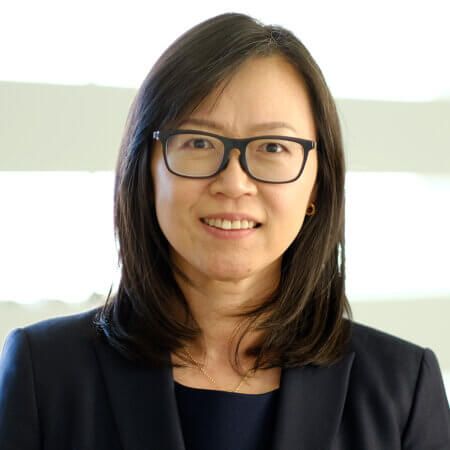
Di Zhou, CFA, FRM®
Portfolio Manager and Managing Director
Di Zhou, CFA, FRM, is a portfolio manager for Thornburg Investment Management, rejoining the firm in 2025. From 2021 to 2025, Di was an investment principal at Cambiar. Prior to Cambiar, she joined Thornburg in 2010 as an equity research analyst and was promoted to associate portfolio manager in 2014, then to portfolio manager in 2015. Di began her career…
Learn More
Literature
More Insights

Global Equity
Reflecting On the Anniversary of Thornburg Global Opportunities Fund
An interview with Miguel Oleaga, Portfolio Manager

Global Equity
Quality Without Dogma: Why Valuation Still Matters
Is quality investing broken, or have investors simply paid too much for it? This article explores why Thornburg believes quality and valuation discipline are inseparable, and why flexibility remains essential to long-term investing.
Markets & Economy
Signal Over Noise: A Conversation on Global Markets
At Thornburg, we separate signal from noise in today's global markets, sharing how active, high-conviction research shapes portfolio decisions across countries and sectors.